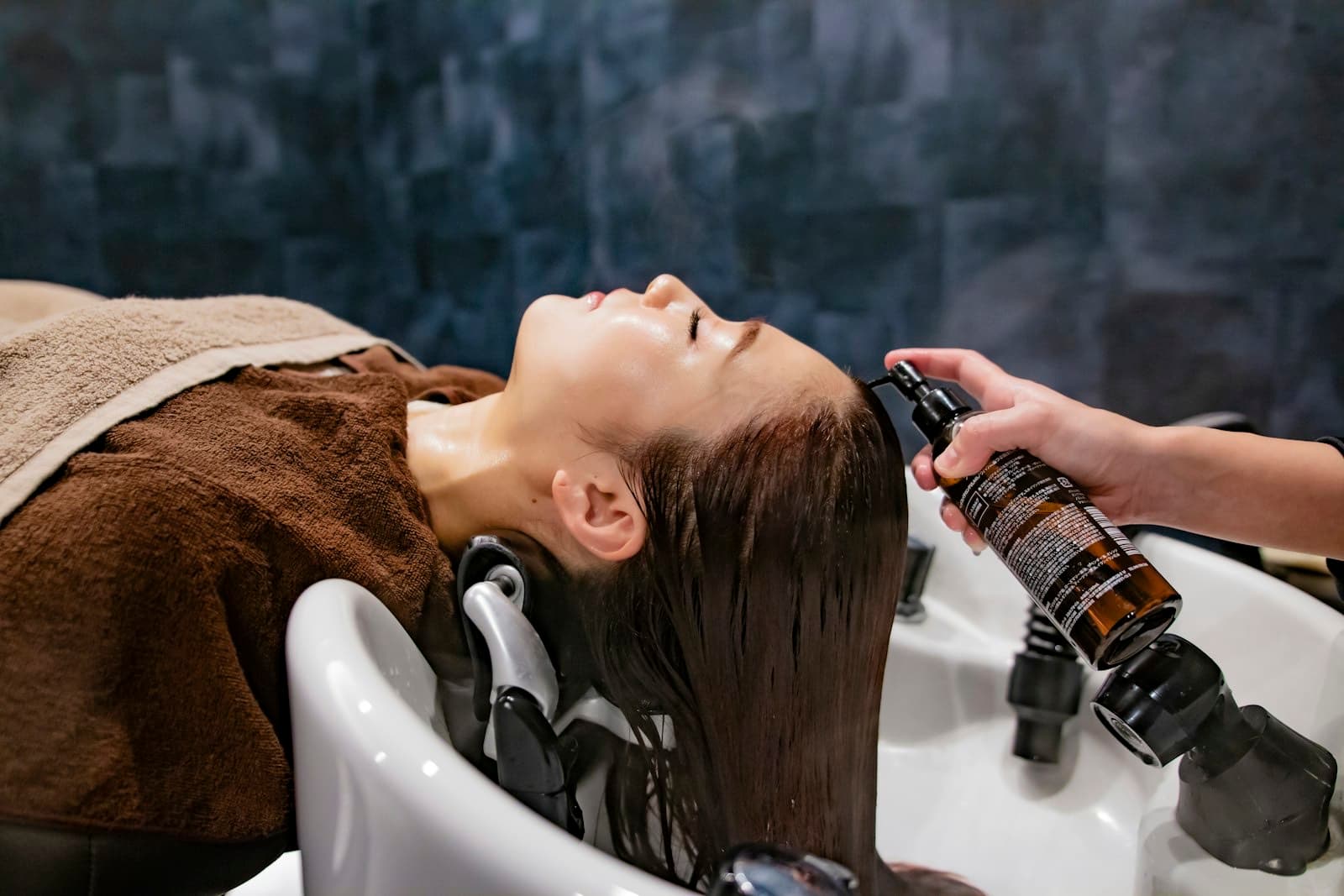
Booking your first head spa can feel slightly daunting if you don't know what's coming. Unlike a haircut, where most people know roughly what to expect, a head spa involves steps that are unfamiliar to a lot of first-time visitors — scalp cameras, steam caps, extended massage. This guide walks through a typical UK appointment from start to finish, so you can turn up feeling prepared rather than guessing.
Before you arrive
Most studios ask you not to wash your hair immediately before your appointment. This might sound counterintuitive, but the point is that the therapist needs to see your scalp as it naturally is — oil, product build-up and all — in order to assess it properly and choose the right approach. Arriving with freshly washed hair can actually make it harder for them to see what's going on.
It's also worth thinking ahead about anything you'd want to mention: recent colour or chemical treatments, known sensitivities, skin conditions, or scalp concerns. You don't need to prepare a speech — the consultation covers this — but having it in mind means you won't forget anything important once you're there.
Arrival and consultation
Most head spa studios have a noticeably calmer atmosphere than a typical hairdresser — softer lighting, quieter music, sometimes a small waiting area with tea or water on offer. You'll usually be asked to fill in a short form or have a brief conversation covering your hair type, scalp concerns, any allergies, and what you're hoping to get from the session.
This consultation matters more than it might seem. It's where the therapist decides which products to use, how much pressure to apply, and whether any particular technique should be avoided. Don't be afraid to ask questions here too — if you're unsure what a particular step involves, this is the moment to find out.
 Photo: Usen Parmanov / Unsplash
Scalp analysis
Many studios use a handheld microscope camera to show a close-up, magnified view of your scalp on a nearby screen before starting any treatment. It's a striking thing to see the first time — areas of dryness, oil, or product build-up become obvious in a way you'd never notice just looking in a mirror. Not every studio offers this, but where it's available, it's a genuinely useful way to understand your own scalp condition and track changes if you become a regular visitor.
The treatment itself
A typical session then moves through several stages:
- Cleansing. One or more shampoo steps focused on lifting build-up from the scalp, not just cleaning the hair.
- Massage. The centrepiece of most sessions, and usually the longest single step — commonly fifteen to forty minutes, depending on the treatment you've booked. This is where most of the relaxation comes from, and it may involve hands alone or a combination of hands and small tools.
- Mask or treatment step. A product designed to address a specific concern — dryness, sensitivity, flaking — often left on for a period, sometimes with steam or a heated cap to help it work.
- Final rinse and finish. A thorough rinse, followed by a blow-dry or light styling to send you off looking put together.
A full session commonly runs between forty-five minutes and ninety minutes in total, so it's worth blocking out proper time in your diary rather than squeezing it between other commitments.
During the appointment: etiquette basics
You don't need to do much beyond relaxing, but a few small courtesies go a long way. Keep phone use to a minimum, particularly during the massage portion — it's a treatment built around switching off, and constant scrolling rather undercuts the point. If pressure feels too firm or too light at any stage, say so; therapists genuinely want feedback and would rather adjust than have you sit through something uncomfortable. And if you need the bathroom or want a break partway through, just ask — nobody will mind.
Tipping in the UK
Tipping conventions for head spas broadly follow the same pattern as hairdressers and beauty treatments generally in the UK: it's appreciated but not obligatory, and there's no fixed national standard. Where a service charge isn't already included, many people tip somewhere in the region of ten to fifteen per cent for a treatment they were happy with, either in cash or added via card at checkout. If you're ever unsure, it's entirely acceptable to ask the front desk what's typical at that particular studio — staff are used to the question and won't think it's awkward.
After your session
You'll usually be offered water and given a moment to sit before heading out — head spas can leave you feeling quite drowsy in a pleasant way, especially after a long massage, so there's no need to rush off immediately. Most therapists will also offer a brief rundown of what they found during the scalp analysis and any product or aftercare suggestions, though remember this is grooming advice rather than medical guidance.
Finding somewhere for your first visit
If you're not sure where to start, browsing our directory is a good way to compare studios near you and see what different providers include as standard. You can also look at listings by area — for example, spas offering head spa treatments in Manchester — to get a sense of pricing and style before you commit to a booking.
A final word
The most common thing first-timers say afterwards is that they wish they'd booked one sooner. Once you know the general shape of the appointment — consultation, analysis, cleansing, massage, treatment, finish — there's genuinely nothing to feel nervous about. Go in with reasonable expectations, mention anything relevant during the consultation, and let the hour do its job.