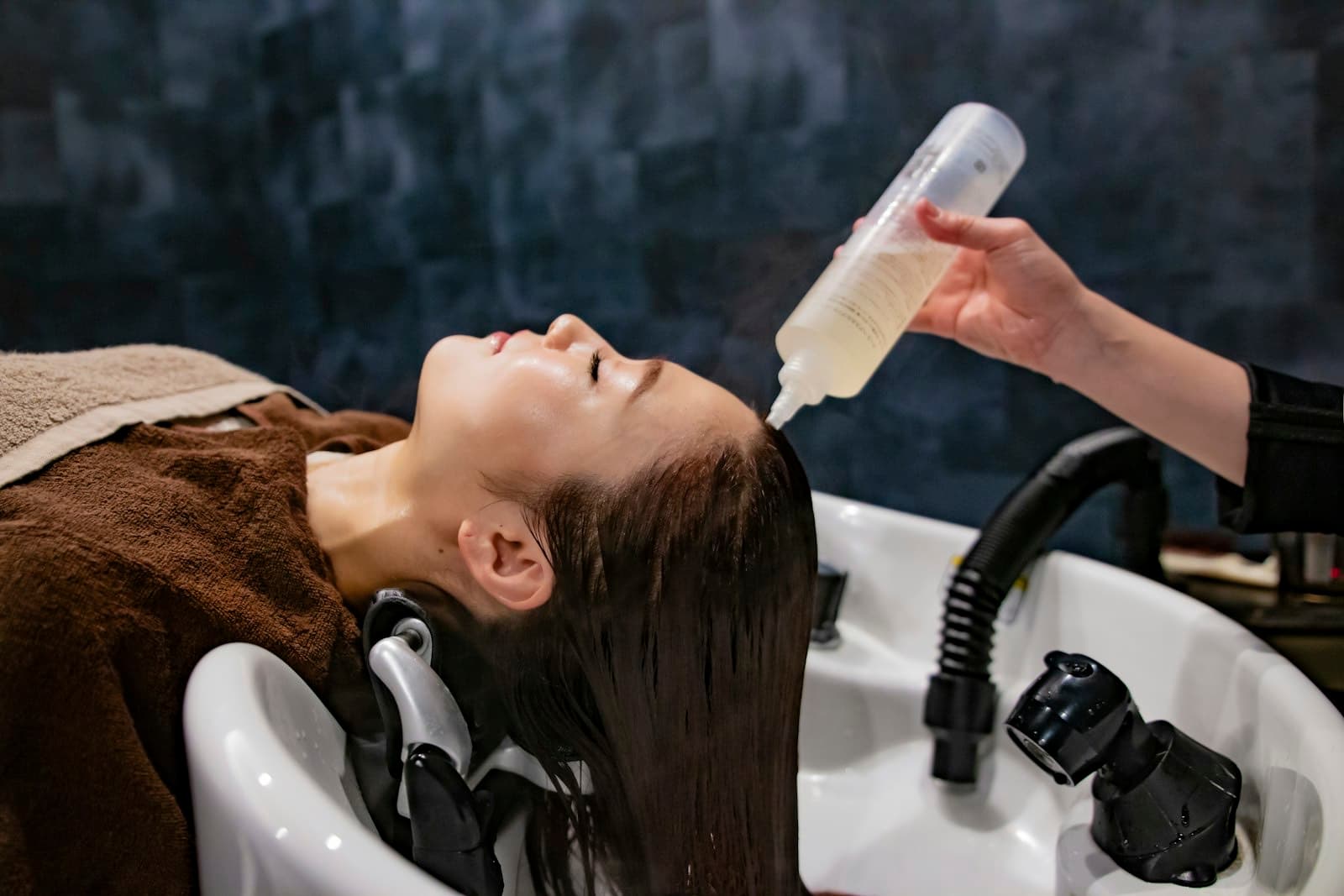
Hair gets most of the attention in most people's routines, but the scalp underneath it is skin, and like any other skin, it has its own type, tendencies, and occasional problems. Understanding the basics can help you make sense of what a head spa or any other scalp treatment can realistically do for you, and just as importantly, when a professional beauty treatment isn't the right tool for the job.
Scalp types, in general terms
Much like facial skin, scalps are often loosely categorised as oily, dry, combination, or "normal" or balanced, though in practice most people sit somewhere on a spectrum rather than fitting neatly into one box.
An oily scalp tends to produce sebum (natural oil) more quickly, which can leave hair looking greasy sooner after washing and may contribute to product build-up if styling products aren't fully rinsed out. A dry scalp, by contrast, can feel tight, flaky, or itchy, sometimes linked to weather, over-washing, or harsher shampoos that strip away natural oils. A combination scalp might be oilier in some areas (often nearer the crown) and drier at the edges. None of these categories are fixed for life — hormonal changes, weather, stress, and product choices can all shift where you sit on the spectrum over time.
Knowing your general tendency is useful mainly for choosing appropriate products and understanding what a scalp treatment is actually addressing, rather than being a label to worry about.
Understanding build-up
"Build-up" refers to the accumulation of natural oils, dead skin cells, and residue from styling products (dry shampoo is a common contributor) that isn't fully removed by everyday washing. It's a completely normal, non-medical occurrence, though it can leave hair looking flatter, feeling less fresh, and — for some people — contribute to an itchy or congested-feeling scalp.
Build-up isn't inherently harmful, but many people find that regularly clearing it, whether through a more thorough at-home wash routine or an occasional professional treatment such as a head spa, leaves the scalp feeling more comfortable and the hair looking healthier. This is one of the more genuinely well-supported, practical benefits of a head spa treatment — it's essentially a deep clean.
 Photo: Emma Ou / Unsplash
Common, everyday scalp concerns
A number of scalp issues are common enough to be considered a normal part of hair care rather than a medical problem requiring treatment:
- Mild dryness or flaking, often related to weather, central heating, or product choice, and often improved with a gentler shampoo or a moisturising scalp product.
- Occasional itchiness, which can stem from build-up, dryness, or simply a reaction to a new product, and often resolves once the trigger is identified and removed.
- General oiliness, particularly common in warmer months or with certain hair types, usually managed through washing frequency and product choice rather than requiring treatment.
These sit at the milder end of the spectrum and are the kinds of concerns a head spa or a good haircare routine can genuinely help with.
When it's more than a routine concern
Some scalp issues go beyond what everyday care or the occasional treatment can address, and recognising the difference matters. Persistent, significant flaking that doesn't improve with a change of shampoo, ongoing redness or soreness, noticeable hair thinning or loss, painful or inflamed patches, or dandruff that doesn't respond to standard anti-dandruff products can all be signs of an underlying condition — such as seborrhoeic dermatitis, psoriasis, fungal infections, or other dermatological issues — rather than something a wellness treatment alone will resolve.
If you notice any of these, the right next step is a GP or pharmacist, and for ongoing hair and scalp concerns specifically, a trichologist. These professionals can properly diagnose what's happening and recommend appropriate treatment, which might include medicated shampoos, topical treatments, or further investigation. This is worth being genuinely firm about: no spa treatment, head massage, or cosmetic product is a substitute for that kind of diagnosis when something persistent or unusual is going on.
Where treatments like a head spa fit in
None of this means treatments and professional scalp care have no place — quite the opposite. A head spa can be a useful, enjoyable part of general scalp maintenance: a thorough clean, a relaxing massage, and a chance to have your scalp looked at by someone who does this regularly and might notice something worth mentioning. Many studios that offer scalp analysis with a magnified camera view can be a helpful, low-stakes way to keep an eye on your scalp's general condition over time.
The key distinction is between maintenance and treatment. General dryness, build-up, or mild itchiness sit comfortably in maintenance territory, where a head spa and a sensible home routine are genuinely useful. Anything persistent, painful, or unusual sits in treatment territory, where medical advice should come first, with any spa treatment as a supplement afterwards rather than an alternative.
Building a sensible routine
A reasonable approach for most people combines a few basics: washing at a frequency that suits your scalp type rather than a fixed schedule copied from someone else, choosing gentle products where possible, not over-relying on dry shampoo between washes, and treating persistent or worsening symptoms as a reason to see a professional rather than waiting them out. Occasional treatments — whether a head spa or simply a more thorough at-home wash — can sit comfortably alongside this as a maintenance boost.
If you'd like to explore professional scalp treatments as part of your routine, our directory lists studios offering head spa and related scalp treatments across the UK, and you can read more in our guide to what a head spa actually involves.
The bottom line
Most everyday scalp concerns — dryness, oiliness, occasional flaking, build-up — are normal and respond well to sensible routine care and occasional treatments. Anything persistent, painful, or unusual is a different category entirely, and deserves a GP, pharmacist, or trichologist's attention rather than being managed through spa treatments alone.