Most head spa menus in the UK reference "Japanese head spa" somewhere in their name or description, but relatively few customers know exactly why. The phrase isn't just a marketing flourish — it points to a genuine origin and a specific approach to scalp care that shaped how the treatment is delivered almost everywhere it's now offered, including in the UK.
Where the tradition began
The Japanese head spa developed as a specialised area of hair and beauty care in Japan, distinct from a standard salon wash. Sometimes described using a term that translates roughly to "head osteopathy," the approach treats the scalp as its own area of focus, deserving the same level of ritual and precision that Japanese spa and beauty culture is generally known for. Rather than a brief shampoo before styling, the scalp becomes the primary purpose of the appointment.
This reflects a broader pattern in Japanese personal care, where attention to detail and unhurried process are valued in their own right, not just as a means to an end. A head spa in this tradition isn't rushed through — the steps are deliberate, the tools are often specialised, and the pacing allows each stage to be completed properly rather than compressed to save time.
The structure of a traditional session
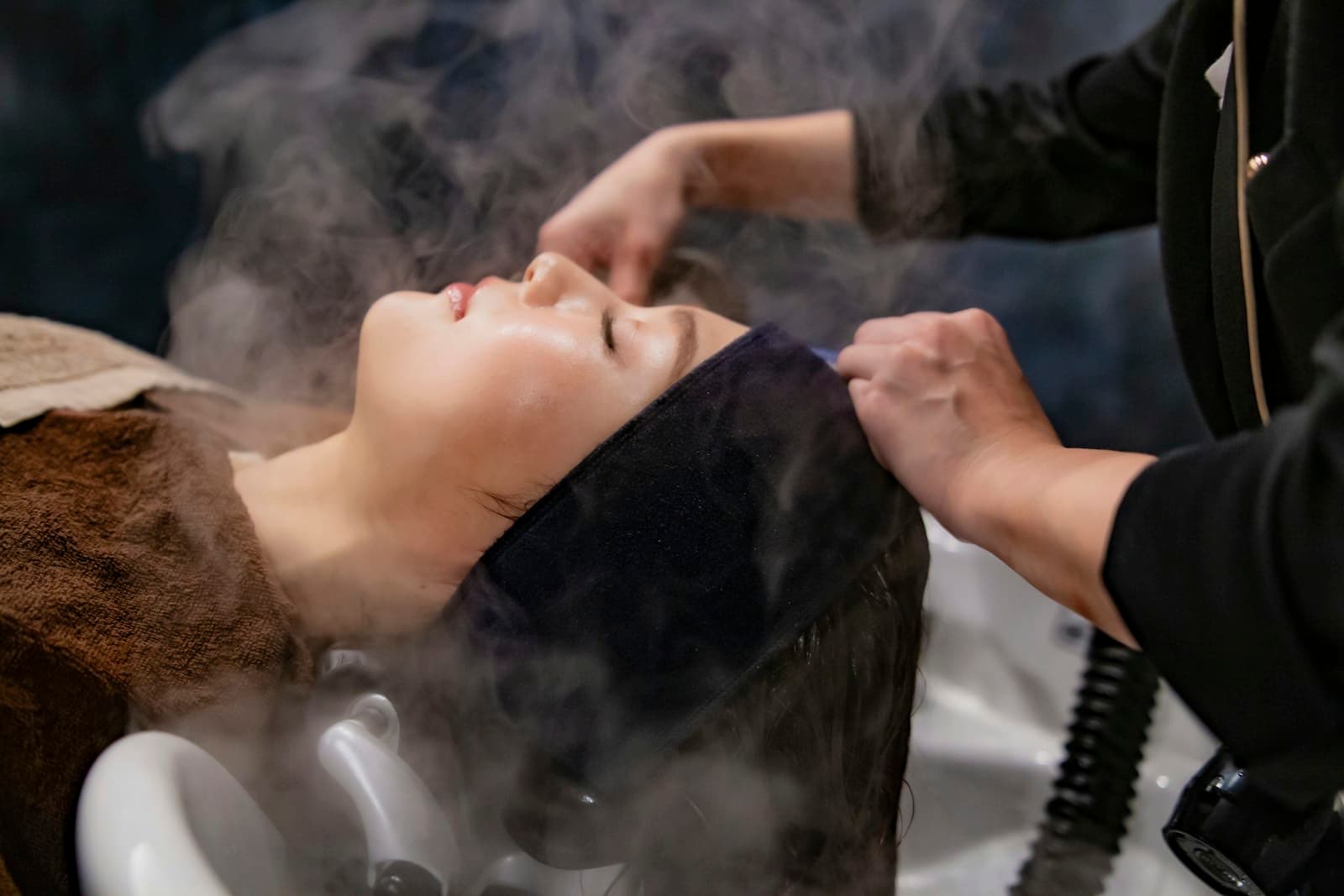
While specifics vary between practitioners, traditional Japanese head spa sessions tend to share a recognisable shape: a careful assessment of the scalp's condition, a cleansing phase using techniques designed to work product and oil out of the scalp rather than just the hair, an extended massage phase using specific hand techniques (and sometimes specialised tools) to work across the whole scalp, and a finishing phase that might include a treatment product suited to what was found during the assessment.
The massage element in particular is often more technical than a general relaxation massage — traditional approaches can include quite precise pressure-point work across the scalp, along similar lines to reflexology or shiatsu elsewhere in Japanese bodywork traditions. The overall aim throughout is a genuinely thorough, methodical treatment of the scalp as skin, not simply a pleasant scratch.
 Photo: engin akyurt / Unsplash
How the ritual spread
Japanese head spa techniques and the broader concept travelled first across East Asia and then into Western markets over recent years, arriving in the UK as dedicated head spa studios began opening in cities and towns across the country. As with most imported treatments, the journey wasn't a straight copy-paste — techniques were adapted, blended with other spa traditions, and packaged in ways that suited local salon culture and customer expectations.
How UK venues have adapted it
UK head spa studios typically borrow the core structure of the Japanese approach — consultation, cleansing, extended massage, treatment step, finish — while blending in elements that are more familiar to a Western spa audience. It's common to see UK sessions incorporate aromatherapy oils, ambient music more associated with European spa settings, heated steam caps, or scalp cameras that let you see a magnified view of your own scalp on a screen before treatment begins.
The massage technique itself has also been adapted in many UK studios, often combining traditional Japanese scalp-massage principles with broader relaxation-massage approaches more familiar to British spa-goers, rather than sticking rigidly to a single traditional method. Session lengths have shifted too — a typical UK appointment commonly runs forty-five to ninety minutes, fitted around how UK salons and spas typically schedule appointments.
None of this makes the UK version any less legitimate. It reflects the same pattern seen with plenty of imported wellness treatments — the core idea travels, and the specific execution adapts to local expectations, available products, and typical appointment lengths.
What to look for if you want an authentic-leaning experience
If the origin and technique specifically matter to you, it's worth asking a studio directly about their approach before booking — some position themselves as closely following traditional Japanese methods, including specific massage techniques or tools, while others use "Japanese head spa" more loosely as a category label covering any scalp-focused spa treatment. Neither is wrong, but they can be quite different experiences, so a quick question at the point of booking will set the right expectations.
It's also worth remembering that, traditional roots aside, a head spa remains a wellness and grooming treatment rather than a medical one. Whatever technique a studio uses, claims about curing scalp conditions or dramatically altering hair growth go beyond what any version of the treatment — traditional or adapted — can reliably deliver. If you have a genuine medical scalp concern, a GP or trichologist remains the right port of call, alongside any wellness treatment you choose to enjoy.
Where to try one
Head spa studios describing themselves as Japanese-style or Japanese-inspired are now widespread across the UK, and browsing our directory is a good way to compare what different studios offer under that label. You can also see the treatment listed more generally under Japanese head spa treatments, alongside other scalp and hair options, if you'd like to compare it against related services before booking.
The bottom line
"Japanese head spa" refers to a genuine tradition of scalp-focused, ritualised treatment that originated in Japan and has since spread worldwide, adapting as it went. UK versions typically keep the core structure — thorough cleansing, extended massage, a dedicated treatment step — while blending in familiar Western spa elements. Knowing that history doesn't change what happens in the chair, but it does explain why the treatment looks the way it does, and why it's worth taking seriously as more than just a trend.