Confusion between a head spa, a salon conditioning treatment, and a standalone head massage is understandable — all three involve your hair or scalp, all three can feel relaxing, and salon menus don't always explain the distinctions clearly. If you're trying to decide which one to book, it helps to understand what each is actually built to do.
What a conditioning treatment is for
A salon conditioning treatment — sometimes called a deep conditioning treatment, a hair mask service, or something similar depending on the salon — is primarily about the hair itself rather than the scalp. It typically involves applying a concentrated conditioning product to the lengths and ends of your hair, sometimes with heat to help it absorb, before rinsing out. The goal is usually to address dryness, damage, frizz, or dullness in the hair shaft, particularly for colour-treated, chemically processed, or heat-styled hair that's lost some of its natural condition.
These treatments are typically quick — often fifteen minutes or less — and are frequently added on to a haircut or colour appointment rather than booked as a standalone service. The scalp isn't really the focus; if anything, some conditioning products are applied specifically to the lengths and kept away from the roots and scalp to avoid weighing hair down or leaving it greasy at the roots.
What a head spa is for
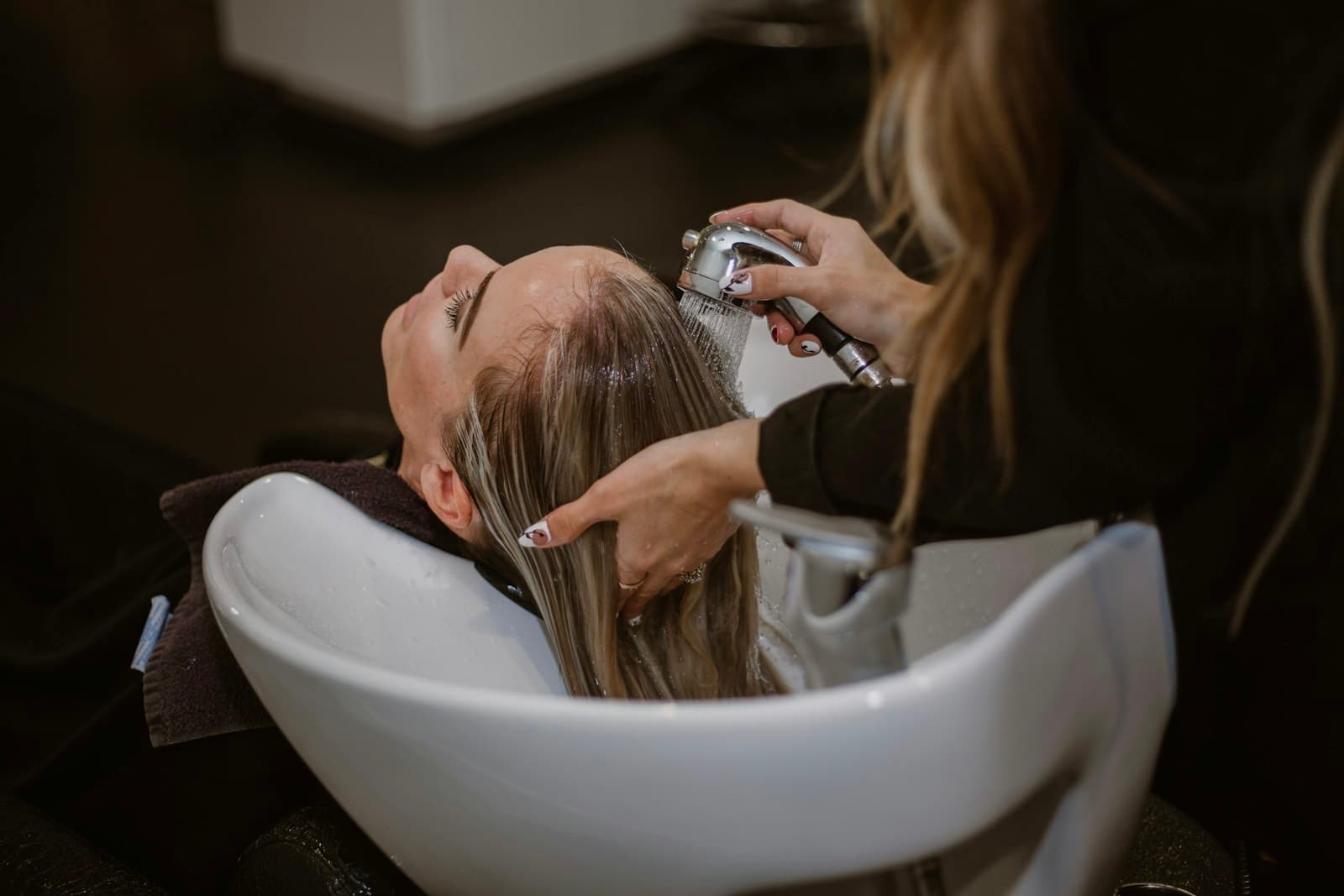
A head spa flips that focus entirely. The scalp is the primary subject of the treatment, not an afterthought, and the session is built around scalp analysis, thorough cleansing, an extended massage, and a treatment step aimed at scalp comfort and cleanliness rather than hair condition specifically. Where hair does benefit — and it often does, since a clean, well-cared-for scalp tends to support better-looking hair generally — that's a secondary effect of scalp-focused care rather than the direct aim of the treatment.
Sessions also run considerably longer than a typical conditioning add-on, commonly forty-five to ninety minutes, and are usually booked as a dedicated appointment rather than tacked onto something else.
 Photo: Emma Ou / Unsplash
What a standalone head massage is for
A head massage, whether booked at a spa, offered as part of a broader massage menu, or given informally, is more narrowly about relaxation and tension relief. It typically skips the cleansing, product treatment, and scalp analysis elements entirely, focusing purely on the massage technique itself — sometimes extending into the neck and shoulders. It's usually shorter and simpler than a full head spa, and doesn't involve washing or treating the hair at all.
If relaxation and stress relief are genuinely your only goal, and you're not particularly interested in a scalp clean or analysis, a standalone head massage can be a quicker, often cheaper way to get much of the tension-relief benefit without the full head spa structure.
Comparing them side by side
The clearest way to separate the three is by what each one is actually optimising for. A conditioning treatment optimises for hair condition — softness, shine, manageability — and treats the scalp incidentally at best. A head spa optimises for scalp health and a thorough, ritualised experience, with hair benefits following as a secondary effect. A head massage optimises purely for relaxation and tension relief, without the cleansing or treatment elements at all.
Session length follows a similar pattern: conditioning treatments are typically the shortest and most often bundled with another service, head massages sit in the middle, and full head spa sessions are usually the longest and most involved of the three.
Which one should you book?
The right choice really depends on what you're trying to solve. If your hair itself feels dry, damaged, or dull — particularly after colouring, heat styling, or sun exposure — a conditioning treatment targets that directly and efficiently, and there's little reason to book a longer, scalp-focused session instead. If your main complaint is about your scalp specifically — build-up, tightness, a general feeling that it needs proper attention — a head spa is the better match, since that's precisely what it's designed around. And if all you want is forty minutes of pure relaxation without any particular scalp or hair goal, a standalone head massage might be the simplest and most cost-effective option.
It's also entirely reasonable to use more than one of these at different times, depending on what your hair and scalp need that month, rather than treating them as competing choices you have to pick between permanently.
A note on claims
Whichever treatment you choose, it's worth keeping expectations realistic. None of these three treatments are medical interventions, and none should be relied upon to treat a diagnosed scalp or hair condition — for that, a GP or trichologist remains the right first step. What they can genuinely offer is exactly what's described above: better hair condition, a cleaner and more comfortable scalp, or straightforward relaxation, depending on which one you book.
Finding the right treatment near you
If you're still not sure which option suits you, browsing our directory lets you compare studios and see exactly what's included in each type of treatment before you book. You can also look specifically at hair treatments if a conditioning service sounds like the better fit, or explore dedicated head spa listings if scalp care is what you're after.
The bottom line
A conditioning treatment, a head spa, and a head massage overlap in that they all involve your hair or scalp and can all feel pleasant, but they're built to do genuinely different jobs. Matching the treatment to what you actually want — better hair condition, scalp care, or pure relaxation — is the simplest way to make sure you book the right one.