Not all flaking is the same
"Dandruff" gets used as a catch-all term for anything flaky on the scalp, but it actually covers a range of quite different conditions, from mild dryness that clears up with a change of shampoo to a persistent skin condition that needs medical treatment. Knowing roughly which category you're dealing with matters, because it changes whether a head spa is likely to help, and whether you should be seeing a GP or pharmacist instead of — or as well as — booking a spa treatment.
This guide walks through the main categories, what a head spa can realistically offer for each, and where the line sits between "worth trying a head spa" and "worth seeing a doctor."
Ordinary dry-scalp flaking
The mildest and most common form of flaking is simply a dry scalp — often linked to weather, central heating, over-washing, or using harsh shampoo that strips natural oils. The flakes tend to be small, not usually accompanied by significant redness or itching, and often improve with simple changes: a gentler shampoo, less frequent washing, or a moisturising scalp treatment.
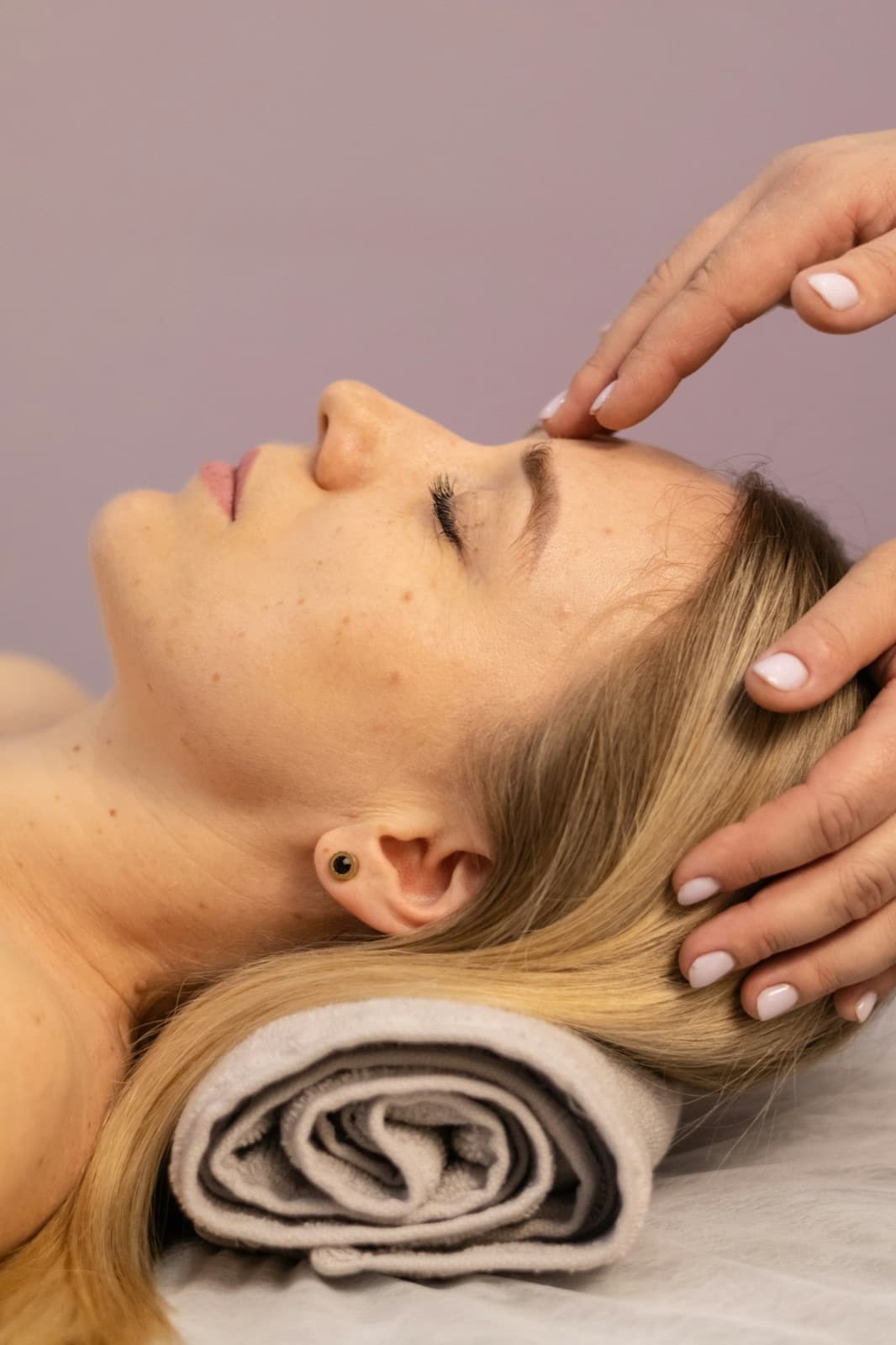
This is the category where a head spa is most likely to genuinely help. A thorough, gentle cleanse combined with a hydrating mask or serum can leave a dry scalp feeling noticeably more comfortable, and many people find the massage element helps too, simply by improving how the scalp feels overall. If your flaking fits this milder pattern, a head spa is a reasonable thing to try.
 Photo: Fulvio Ciccolo / Unsplash
Dandruff (seborrhoeic dermatitis, mild form)
What most people mean by "dandruff" in the everyday sense is usually a mild, chronic scalp condition linked to an overgrowth of a naturally occurring yeast on the skin, combined with excess oil production. It tends to show up as larger, oilier-looking flakes, often with some itching, and it can come and go depending on stress, weather, and general health. This is a genuine, recognised skin condition — not simply dryness — even in its milder, more common form.
For mild dandruff, over-the-counter anti-dandruff shampoos containing ingredients such as zinc pyrithione, ketoconazole, or selenium sulphide are the first-line, evidence-based approach, and a pharmacist can advise on which to try. A head spa isn't a substitute for this kind of targeted treatment, but it isn't necessarily unhelpful either — a gentle, non-irritating cleanse can support a treatment routine, and many people find the process comfortable even while managing dandruff with proper products alongside it. Always tell your therapist about it beforehand so they can avoid products or techniques that might aggravate things.
Seborrhoeic dermatitis (more severe) and other diagnosed conditions
At the more severe end, seborrhoeic dermatitis can cause significant redness, thick or greasy scaling, and persistent itching that doesn't respond to standard anti-dandruff shampoos. Psoriasis is a separate condition that can also affect the scalp, producing thicker, more defined plaques and flaking, and it requires its own diagnosis and treatment approach. Both of these sit firmly in medical territory.
If you have a diagnosed case of either condition, or symptoms that sound like this description and haven't responded to basic anti-dandruff products, a GP or dermatologist is the right person to see — not a head spa. A head spa is a wellness and grooming treatment; it cannot diagnose, treat, or reliably improve a medical skin condition, however relaxing or pleasant the session feels. If you do want to combine spa treatments with managing a diagnosed condition, get your GP or dermatologist's input on whether that's suitable for your specific case first, and be thorough and upfront with your therapist about your diagnosis and any prescribed treatment you're using.
Signs it's time to see a GP rather than book a spa
A few signals suggest medical advice should come before, or instead of, a spa visit: flaking accompanied by significant redness, soreness, or weeping skin; itching severe enough to disturb sleep or daily life; flaking that hasn't responded to a reasonable trial of over-the-counter anti-dandruff shampoo; or any flaking accompanied by hair loss, which can have several underlying causes worth investigating properly. None of these should be worked around with spa bookings — see a GP or pharmacist first.
Using a head spa alongside proper treatment
For many people, the realistic picture sits somewhere in the middle: manageable dandruff or a dry, flaky scalp that responds reasonably well to a sensible haircare routine, with a head spa as an occasional addition rather than the primary treatment. Used this way — as a complement to, not a replacement for, appropriate shampoo or medical advice — a head spa can genuinely make a manageable scalp condition feel more comfortable, alongside the relaxation and thorough cleanse it offers regardless of your scalp's condition.
If you'd like to compare studios that are experienced with sensitive or flaky scalps, our directory lists options across the UK, and our guide to Japanese head spa treatments explains the cleansing and massage process in more detail. But for anything beyond mild, ordinary flaking, a GP or pharmacist should be your first call, not your last resort.